By visiting our site, you agree to our privacy policy regarding cookies, anonymous tracking statistics
Singapore | May 2025
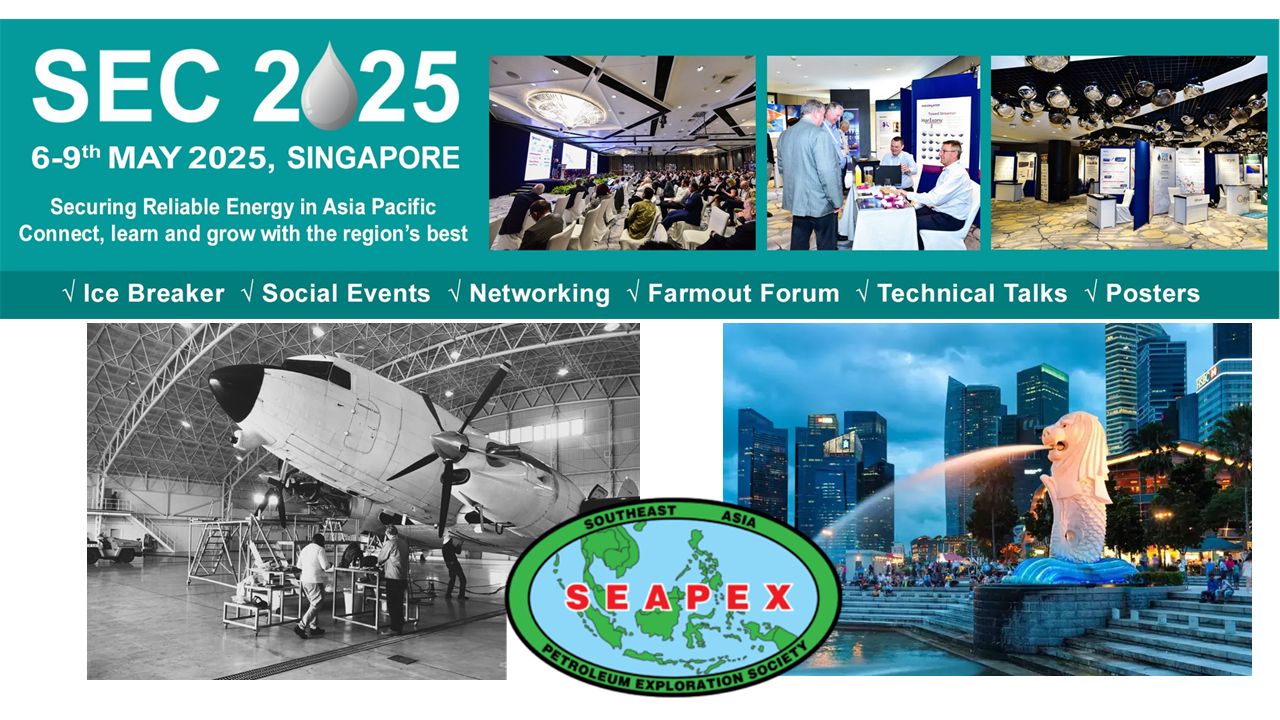
Attending the 2025 SEAPEX Exploration Conference (SEC) in Singapore was an enriching experience that highlighted both the dynamism and complexity of upstream energy exploration in the Asia‑Pacific region. Over four days, the programme combined rigorous technical presentations with strategic discussions on regional energy security, investment opportunities, and emerging geological insights.
Metatek were pleased to be both attending and exhibiting at the conference, allowing Metatek’s Christian Richards and Jonathan Watson to engage with existing and potential clients, and enforce the Metatek brand, in the region, following on from a series of airborne eFTG gravity gradiometry surveys, for both geothermal and hydrocarbon energy exploration, in the previous months.
The event opened with a strong keynote session addressing the imperative of securing reliable energy in Asia Pacific, featuring a reality check on the regional energy transition by Rystad Energy and exploration growth strategies presented by S&P Global and Wood Mackenzie. These talks set a thoughtful tone, emphasising both the opportunities and challenges facing explorers in a shifting market.
Technical sessions showcased a breadth of region‑specific geology and exploration case studies. Presentations on the Beetaloo Basin by Tamboran and 3D seismic imaging on the North West Shelf highlighted advances in understanding frontiers within Australia. Meanwhile, studies on plays in Papua New Guinea and prospectivity in Northwest Palawan, presented by Advance International Exploration and PNOC respectively, underscored geological diversity and targeted exploration risk.
Additional sessions focused on Southeast Asian basins, with Petronas addressing exploration in NW Sabah and Kufpec discussing Malaysia’s evolving basins. Talks on conventional exploration strategies and regional tectonic frameworks — such as Sundaland sediment dynamics and structural delimiters influencing hydrocarbon migration — offered deeper insights into how geological history informs prospectivity today.
Beyond hydrocarbons, the conference also engaged with broader energy themes, including CO2 prediction in reservoir characterisation and the relevance of premium energy basins to emissions reduction, as presented by Chevron Thailand and Rystad Energy. These discussions signalled an increasing recognition that exploration expertise must adapt to the broader energy transition context.
Interactions at the Farm‑Out & Opportunities Forum and government presentations — such as those from the Philippine Department of Energy and the Cambodian Ministry of Mines and Energy — provided practical linkage between geological data, policy reform, and investment incentives. These segments illustrated how technical knowledge is being mobilised in real‑world upstream decision‑making.
Overall, SEAPEX SEC 2025 succeeded in blending technical depth with commercial relevance. As an attendee, I found the range of presentations informative and representative of current exploration thinking across Asia Pacific, reinforcing an appreciation for how geological understanding drives both discovery and strategic investment in the region.