By visiting our site, you agree to our privacy policy regarding cookies, anonymous tracking statistics
London, UK | July 2025
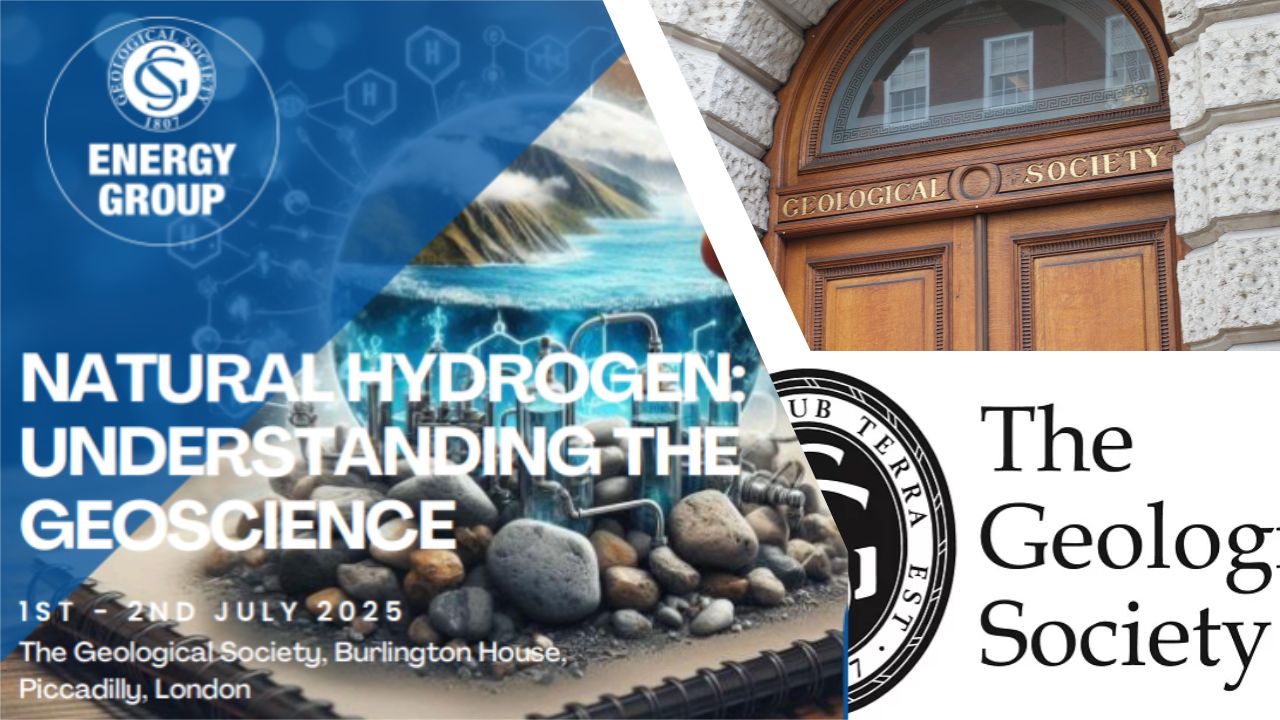
The 2025 Geological Society conference, Natural Hydrogen: Understanding the Geoscience, held at Burlington House, London, on 1-2 July 2025, provided a timely forum for evaluating the emerging field of naturally occurring subsurface hydrogen. Following on from the inaugural conference in 2023, the two-day event convened geoscientists, industry representatives, and policymakers to examine both the scientific fundamentals and the practical potential of natural hydrogen as a low-carbon energy resource.
Presentations focused on the processes governing hydrogen generation, migration, and accumulation, highlighting mechanisms such as serpentinisation, radiolysis, and iron oxidation. Several speakers presented case studies from global locations, illustrating the diversity of geological settings conducive to hydrogen formation and the challenges of quantifying commercially viable accumulations. Sessions on subsurface exploration methods demonstrated innovative applications of geophysical and modelling techniques, providing new approaches for detecting hydrogen-rich structures.
What became clear from many of the talks was that potential field data is an important tool for natural hydrogen exploration, and the advances in, and collection of, such datasets, either by land or airborne platforms, is a key driver in targeting potential subsurface systems. Metatek’s recent field work on natural hydrogen in the UAE and desktop studies of legacy datasets, in multiple geographic locations, further highlights this.
The conference also addressed stimulated geological hydrogen, exploring the potential to enhance natural production through engineered reactions. Discussions emphasized the need for rigorous scientific assessment, regulatory oversight, and environmental stewardship before large-scale deployment. Overall, the meeting effectively consolidated current knowledge, identified research priorities, and fostered collaboration across academia, industry, and policy sectors. Attendees left with a clear sense that while natural hydrogen holds considerable promise, significant research and evaluation remain necessary to realise its potential in the global energy transition.